What 'Real-Time' Actually Means for a Vessel Tracking API
A practical tour of what "real-time" really means when you're tracking ships — the physics of AIS, the latency budget, and how to actually pull positions out of the VesselAPI.
Read more →A practical tour of what "real-time" really means when you're tracking ships — the physics of AIS, the latency budget, and how to actually pull positions out of the VesselAPI.
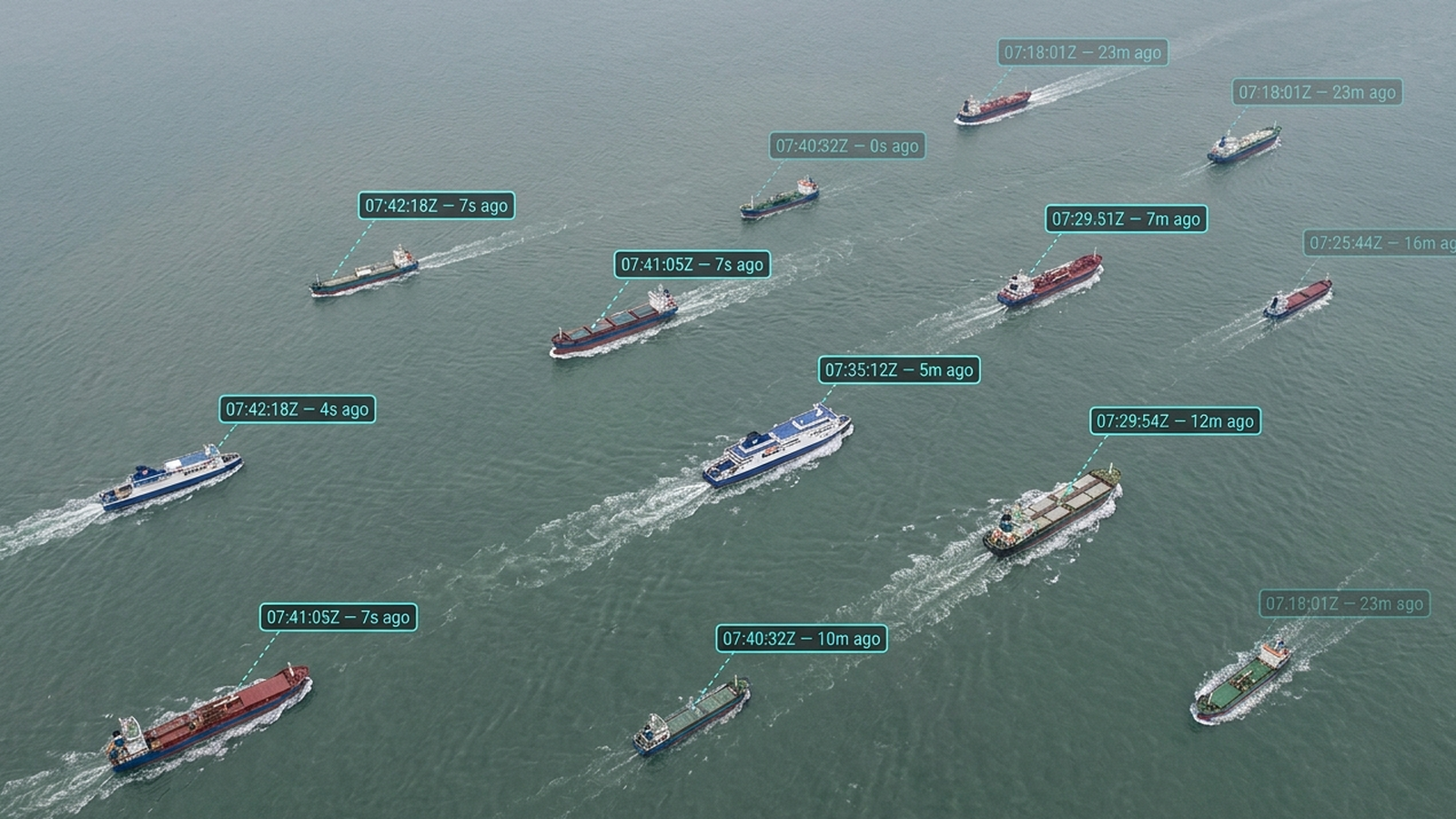
Read more →A practical, honest walkthrough of pulling AIS data into Python — what the messages actually contain, where the gotchas live, and how to build something useful in a few dozen lines.
Read more →
A walk through what actually gets recorded when a ship enters a port, why the timestamps are weirder than you think, and how to query the data cleanly without getting burned.
Read more →How to build vessel geofence webhooks that actually fire when you want them to — AIS data quirks, debouncing, idempotency, and the small architectural decisions that separate a useful alert from a n...
Read more →
An MMSI looks like a phone number for a ship. It almost is. Here's what really happens when you query one — and how to build a lookup that doesn't lie to you.
Read more →
A practical walkthrough of measuring vessel CO₂ emissions via API — what EEXI actually means, why fuel type changes everything, and how to verify a number before you trust it.
Read more →