What 'Real-Time' Actually Means for a Vessel Tracking API
A practical tour of what "real-time" really means when you're tracking ships — the physics of AIS, the latency budget, and how to actually pull positions out of the VesselAPI.
Read more →A practical tour of what "real-time" really means when you're tracking ships — the physics of AIS, the latency budget, and how to actually pull positions out of the VesselAPI.
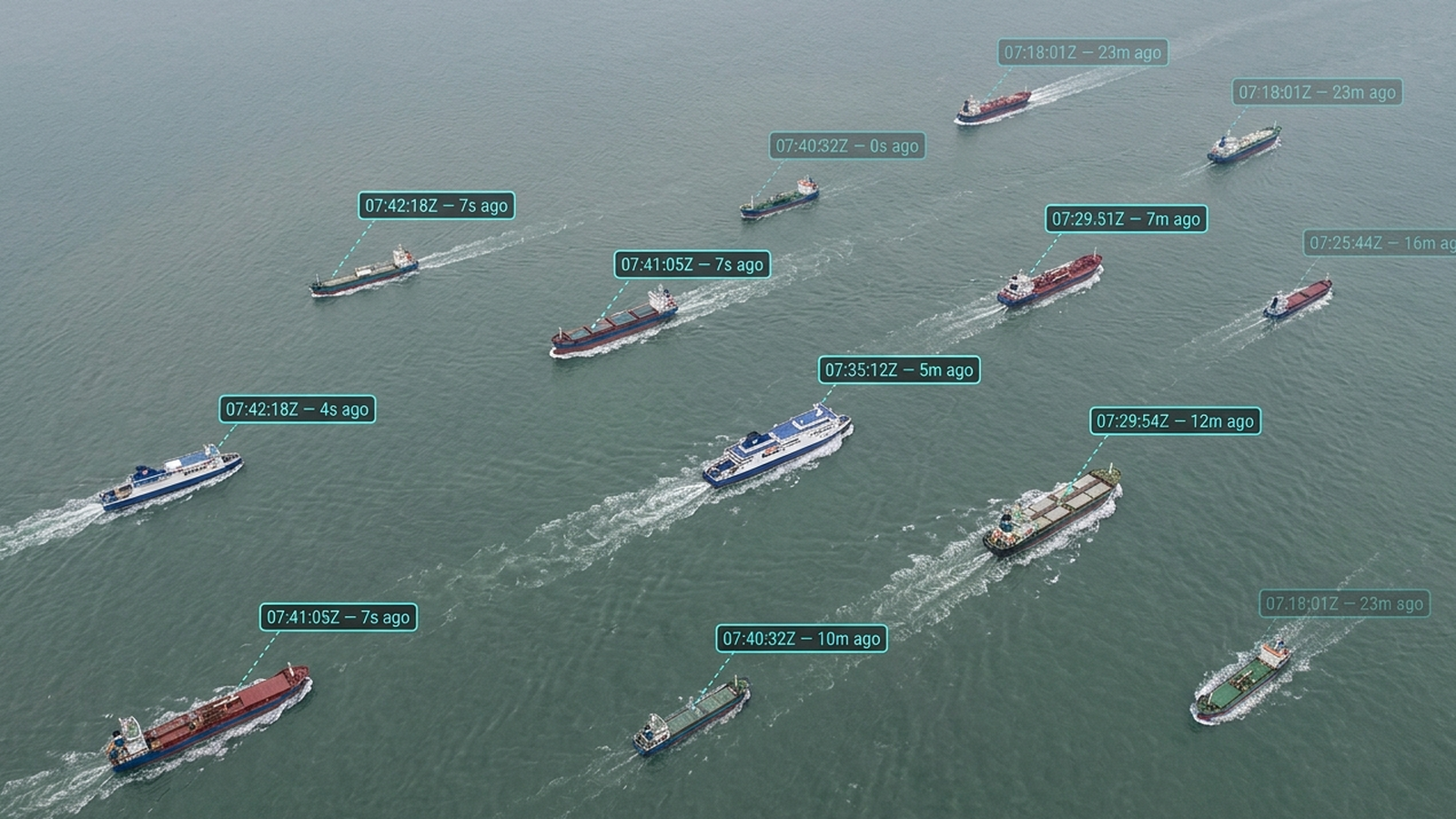
Read more →Maritime email alerts and API-based vessel monitoring look like the same product wearing different clothes. They aren't. Here's what the difference actually costs you.
Read more →
A walk through what actually gets recorded when a ship enters a port, why the timestamps are weirder than you think, and how to query the data cleanly without getting burned.
Read more →How to build vessel geofence webhooks that actually fire when you want them to — AIS data quirks, debouncing, idempotency, and the small architectural decisions that separate a useful alert from a n...
Read more →
How we migrated a maritime AIS platform from MongoDB to TimescaleDB, built two-layer spatial indexing with H3 and PostGIS, and found 240 dead struct tags from the old world.
Read more →